

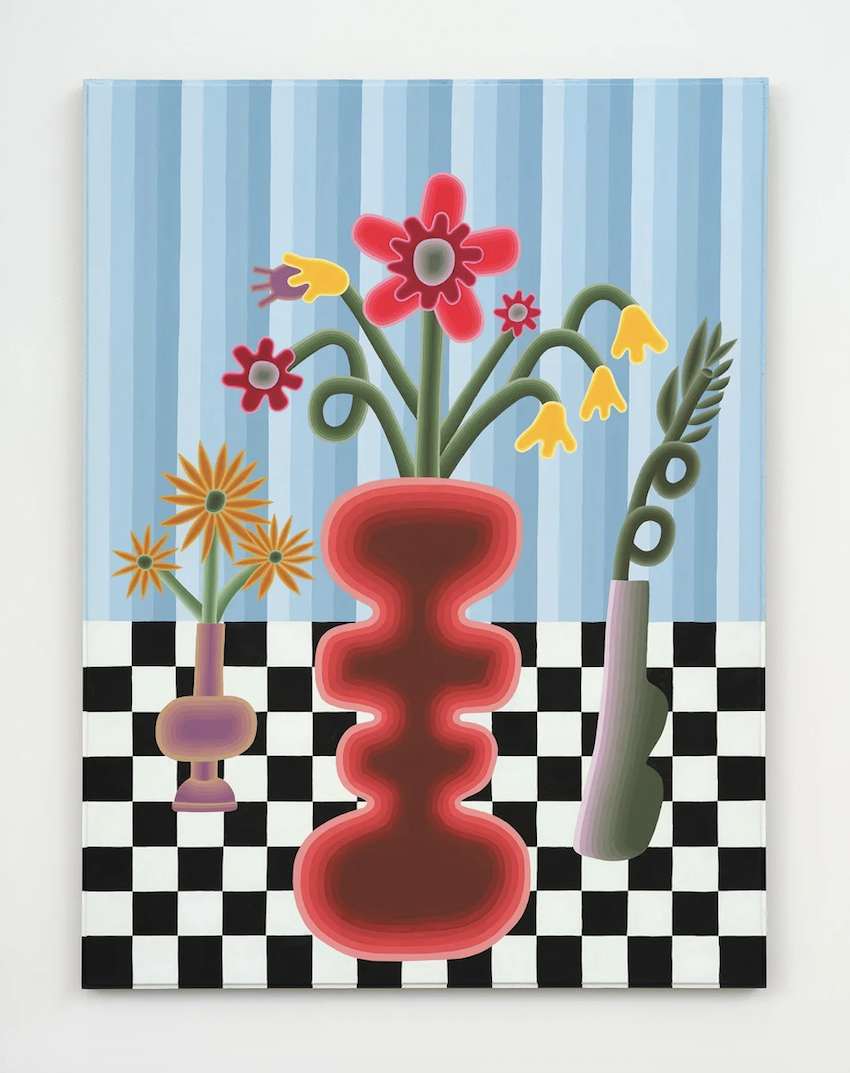
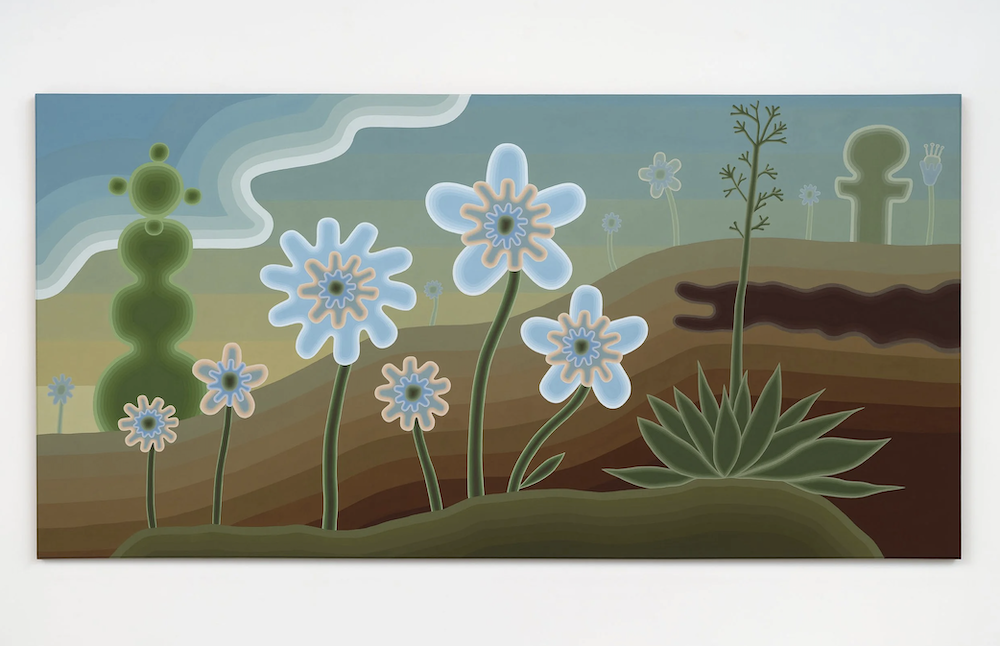
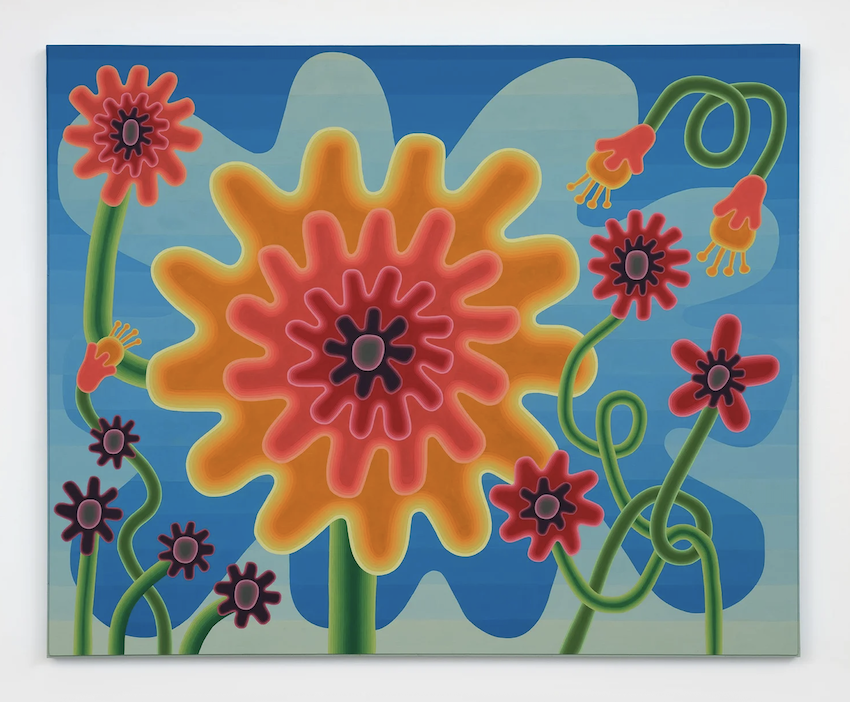
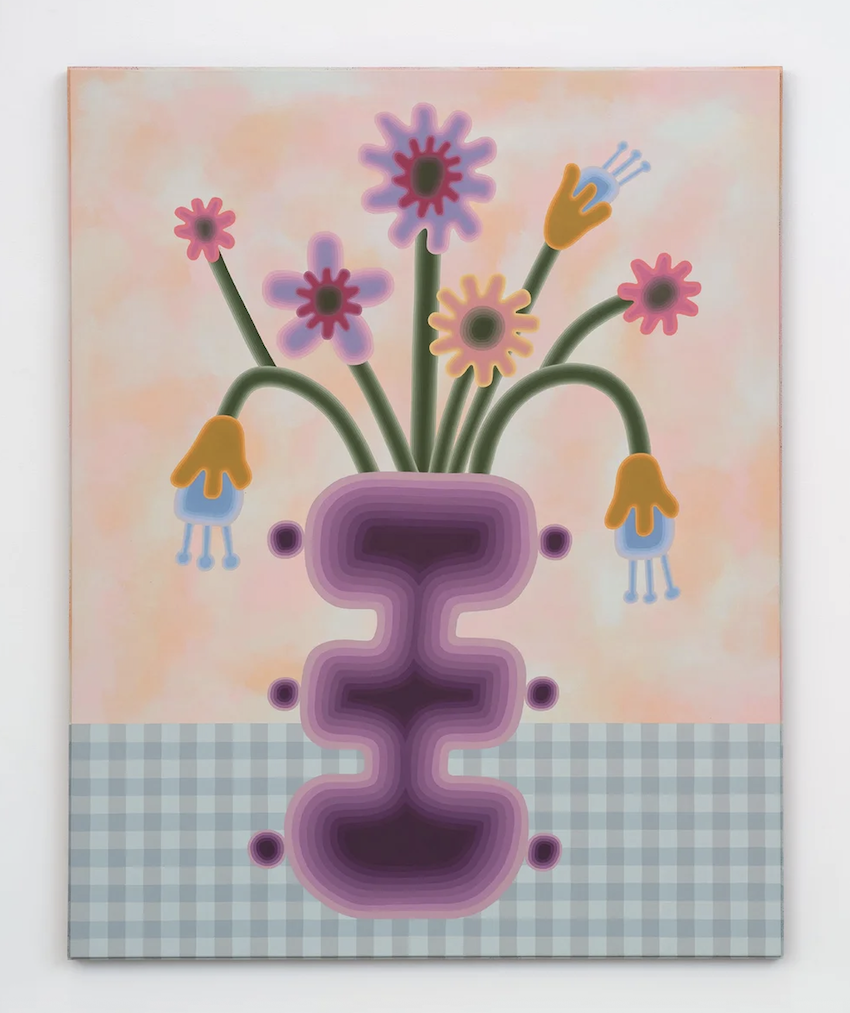
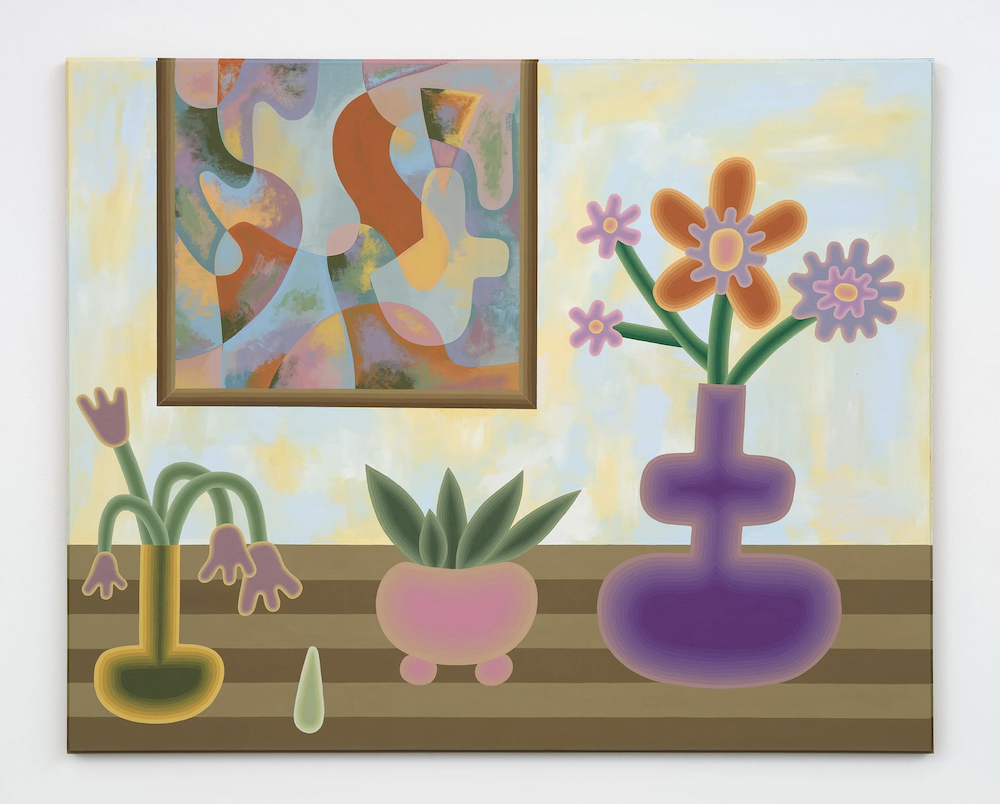
Megan Mulrooney is pleased to present Taut, our first solo exhibition of abstracted still life paintings with Los Angeles-based artist Annie Pendergrast. Flowers, vases, stripes, grids, and looping forms recur across the exhibition, rendered in precise gradients and graphic color combinations. The works feel simultaneously playful and controlled: blooms swell to near-cartoon proportions, stems curl into coiling lines, and patterned backgrounds - gingham, stripes, checkerboards - flatten space while heightening visual rhythm.
While flowers have long functioned as symbols of beauty and femininity, Pendergrast treats them as formal tools, vehicles for testing color, composition, and structure. Still lives emerge here not as quiet domestic scenes but as sites of compression, where decoration and craft are celebrated, and where contemporary design aesthetics surface to elicit both pleasure and uncanniness. Throughout, the work reflects an interest in hybridity and humor: as the artist notes, a form apprehended only one way ceases to feel alive.
Many of Pendergrast’s compositions originate in quick, intuitive drawings, which are later translated into paintings through a slow, methodical process of layering and refinement. Her systematic approach to color, often built around controlled gradients and harmonies, is periodically disrupted. Static points interrupt compositional flow; edges misalign; color systems break open. In several works, leftover paint from previous canvases is reused, introducing chance into an otherwise exacting process. These deviations deliberately interrupt graphic perfection, allowing the paintings to retain vulnerability beneath their finish.
The exhibition engages a lineage of hard-edge and modernist abstraction, nodding to artists such as Miyoko Ito, Albers, Léger, Bridget Riley, Ellsworth Kelly, and Tomma Abts alongside references to miniature painting and illuminated manuscripts, where precision, devotion, and labor coexist. Historically framed as an intellectual counter to the emotional excess of Abstract Expressionism, hard-edge painting’s ascetic restraint is reexamined here as something bodily and psychological. Pendergrast asks whether polish conceals identity and feeling, or whether it can instead make interior states more precisely legible.
Throughout Taut, inanimate forms are imbued with feeling. Like Kandinsky’s observation that Cézanne made living things out of teacups, Pendergrast’s paintings assign emotional presence to objects, colors, and surfaces. This impulse, rooted in a childlike tendency to attribute feeling to the inanimate, extends to the body itself, where nudity, exposure, odor, and desire are understood not as ideals but as states of vulnerability. Pleasure, guilt, devotion, and longing circulate through the work, held taut within structures that are as controlled as they are expressive.