We are so excited to share our interview with Surreal Salon 18 winner, River Reishi, selected by guest juror, Swoon. On the occasion of the win, we spoke with Reishi about the work in the show, the history of Surreal Salon, and her upcoming travels.
Juxtapoz: Congrats on the big win! Talk about the winning work, what the story behind it is, the process, and even the process of submitting it to the Surreal Salon?
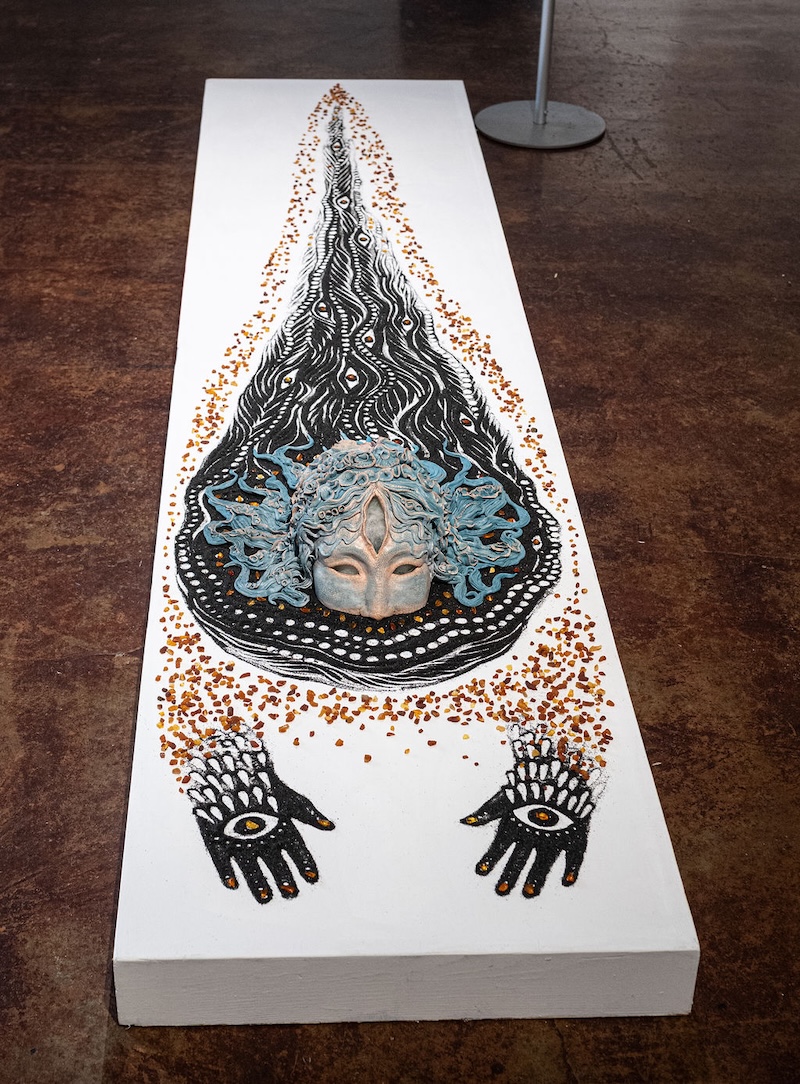
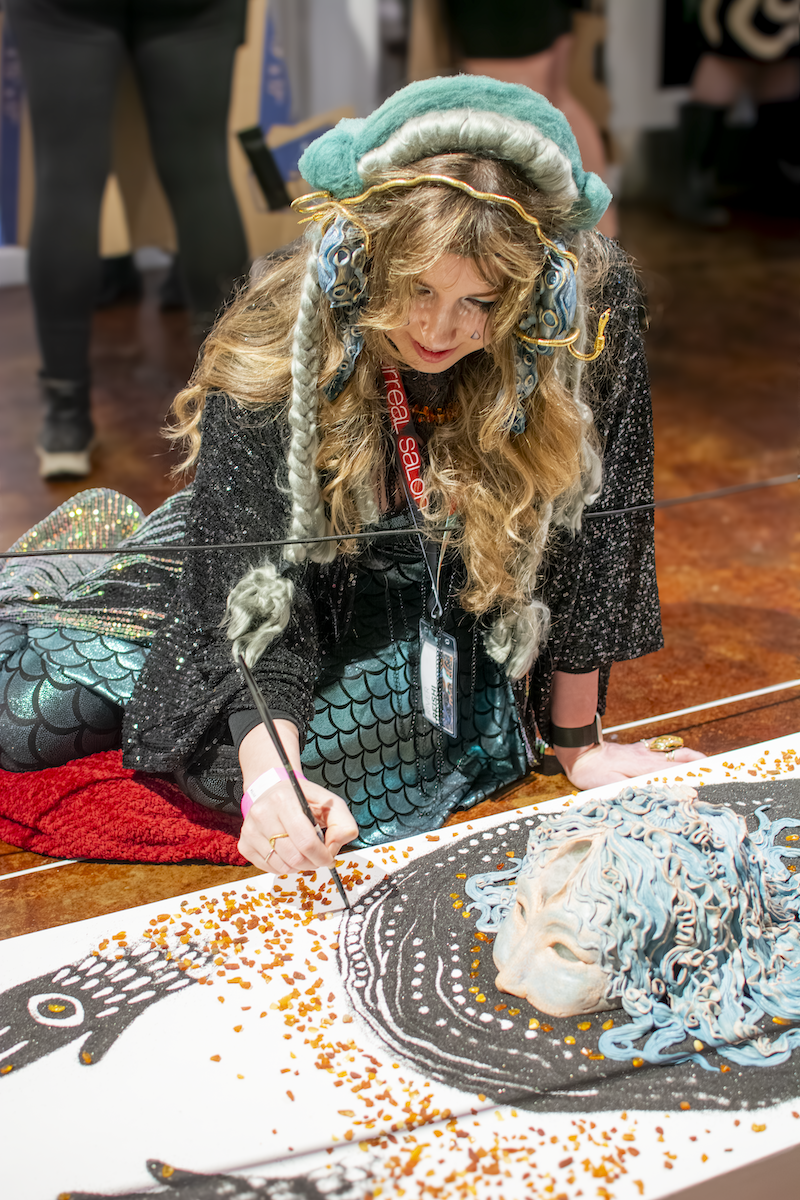
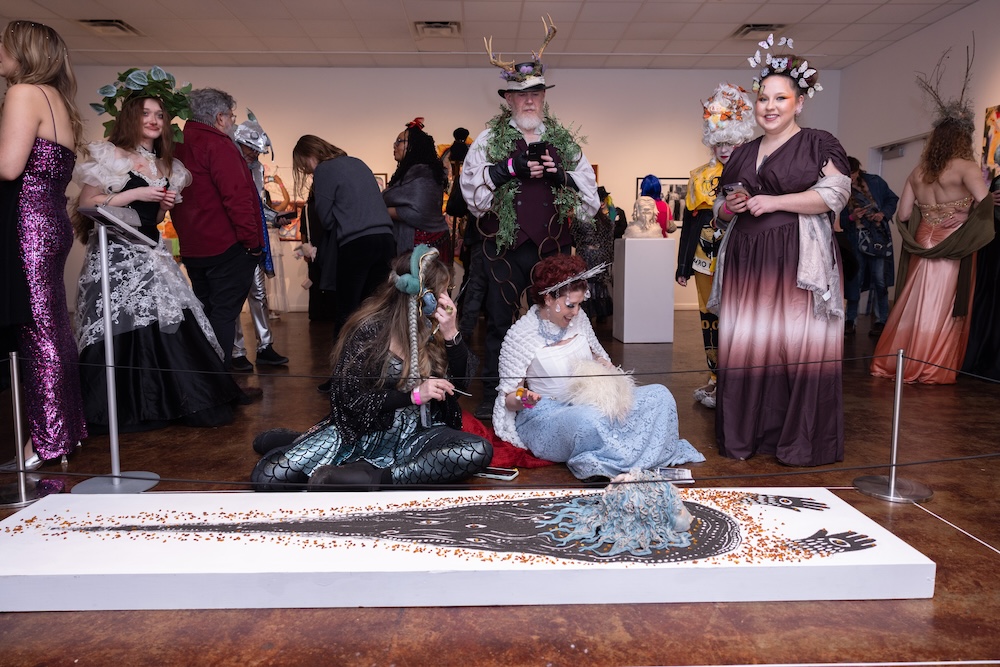
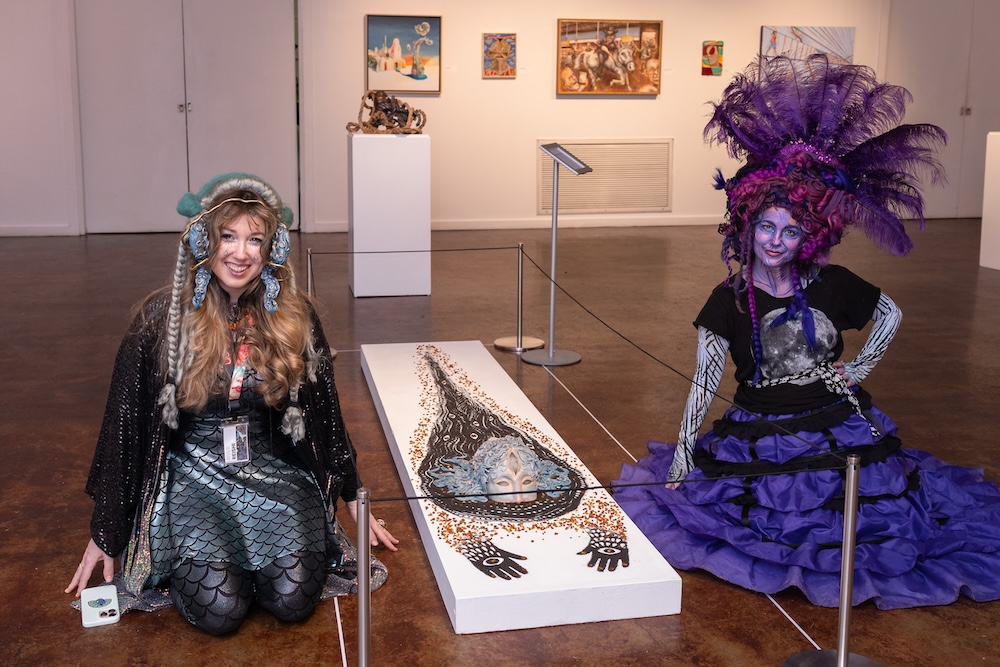
River Reishi: The piece is called Surface Tension. It shows a figure emerging from dark water, her hands reaching forward as if she is about to break through the surface and step into our world. She is half submerged, suspended in that strange moment between two realms. Around her is an ephemeral field of black sand and amber.
From land, the surface of water looks smooth and transparent, almost empty. But of course it hides an entire world that is not ours. I have always been fascinated by that threshold. The installation tries to hold that exact moment where the two worlds meet.
The sculpture also glows faintly from within, which was a little hard to see in the bright gallery lighting but becomes visible as you approach. I like that quiet surprise. The piece looks still at first, but there is a sense that something is about to happen. Water is often a symbol of life, but it also carries danger and power. Louisiana and the Gulf region know that reality very well. I think some of that tension found its way into the work.
The black sand surrounding the sculpture is loose and hand-drawn into patterns, so the installation only exists in that form for a short time. Even small vibrations change it. I am interested in that fragility, in works that cannot quite stay fixed.
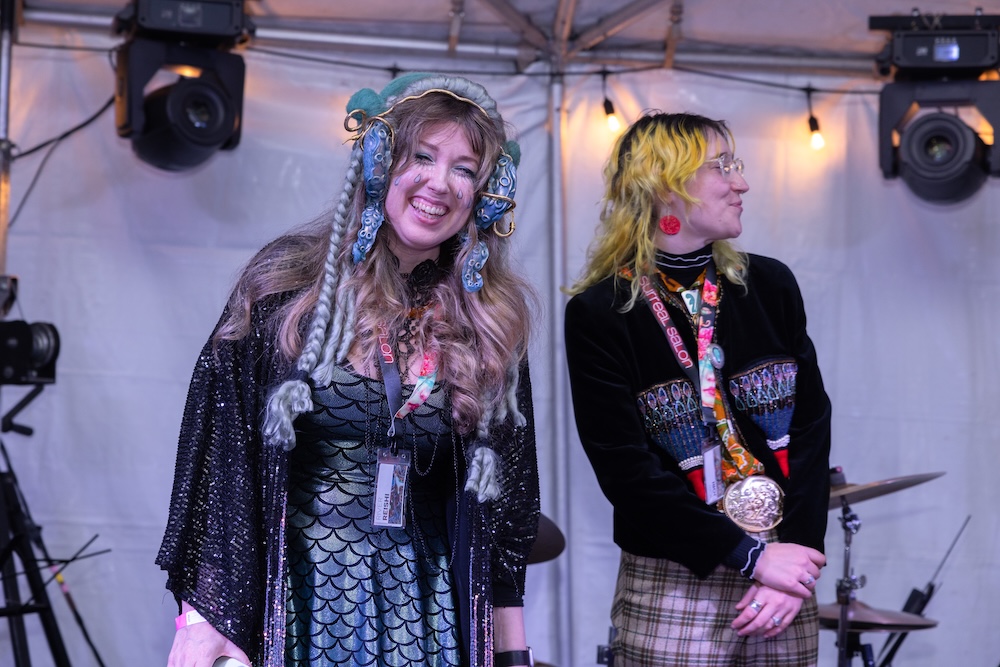
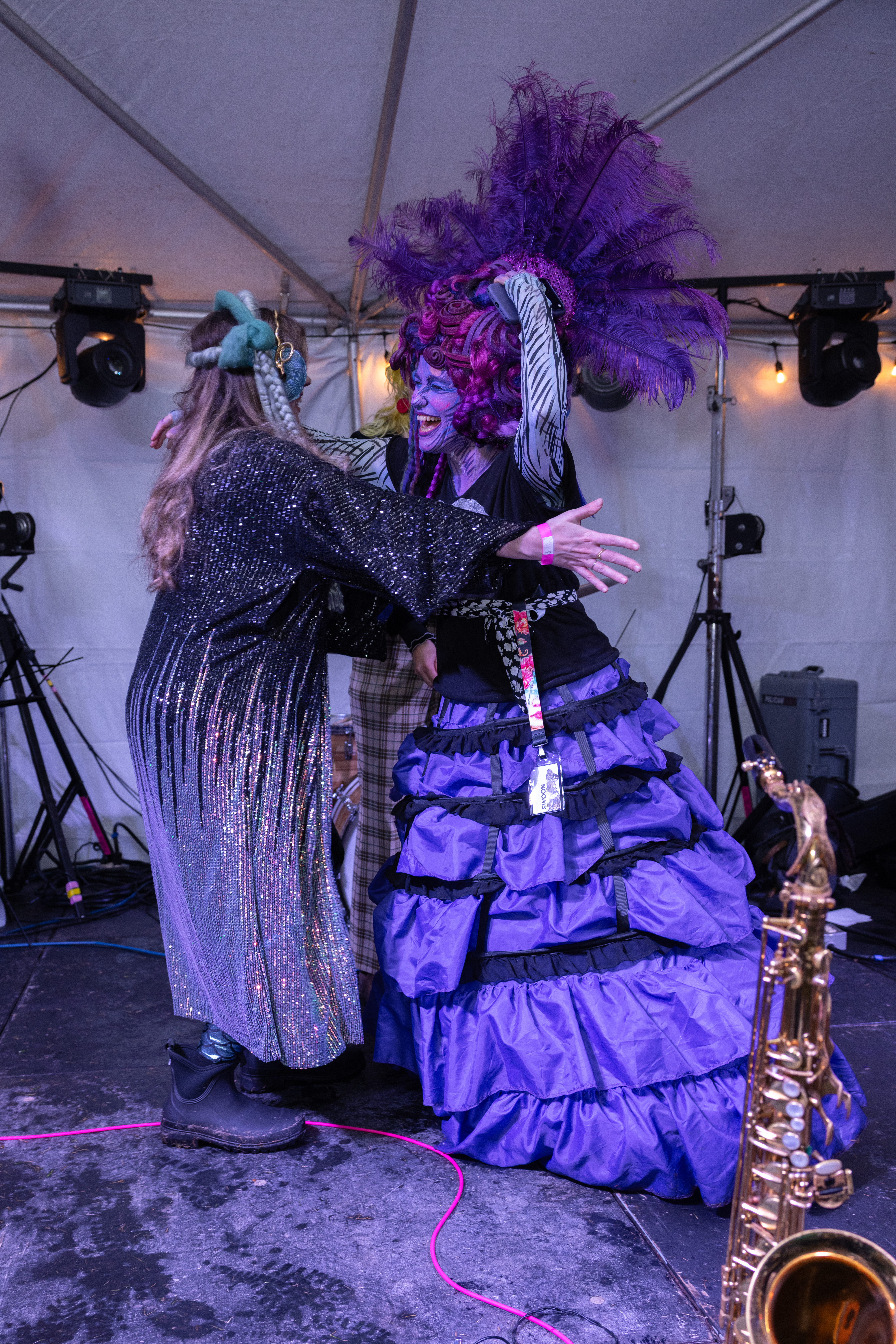
It was already an honor to be included in a show curated by Caledonia Curry (Swoon). When I arrived to install the piece and saw the other works for the first time, I remember thinking how haunting and memorable every single one was. So hearing the piece announced as Best in Show later that night felt surreal in the truest sense. 
Had you followed the Surreal Salon in past years? What did you know about it?
I had heard about the Surreal Salon through the pop surrealist art community for years, but this was the first time I lived close enough to attend in person. I kept hearing that it felt a little like an unofficial kickoff to Mardi Gras season, that people came in elaborate costumes and that the whole evening had this celebratory, slightly otherworldly atmosphere.
What I did not realize until participating this year was that some people actually design their costumes based on the artwork in the exhibition. That was amazing to see. At one point someone came up to me wearing a costume inspired by my piece, and getting to watch him model it and explain how the sculpture influenced the design completely made my night. It felt like the work had briefly stepped out of the gallery and into the room!
Also, it was a wonderful addition to have SWOON be the juror for this year's contest. I have done it in the past, and it was hard, fulfilling work. What did you know of SWOON's work and did that inform your submission at all?
I have admired Swoon’s work for a long time, especially her installations and the way she moves between sculpture, architecture, and public intervention. I first heard about her in 2009 when she brought the Swimming Cities of Serenissima project to the Venice Biennale. A fleet of sculptural rafts floating into one of the most formalized spaces in the art world was such an unforgettable gesture.
The act of arriving that way, without waiting for institutional permission, became part of the artwork itself. That kind of boldness has always stayed with me. It is difficult to break into the art world, especially in spaces where voice is carefully selected and curated. Seeing an artist carve out space for herself so creatively was incredibly inspiring.
I also love the direction her work has been taking recently with the Sibylant Sisters project. My own work is deeply inspired by myth and storytelling, so it has been fascinating to watch her develop that world, creating her own oracle cards and building a living mythology around the work. There is something powerful about artists inventing symbolic languages that people can enter into. So having the chance to meet her and have her encounter one of my installations was a very meaningful moment for me.
You work in a few different mediums, and sculpture and installation seem to be your focus. Talk a little bit about your process and where you feel most comfortable as a maker?
I am not sure I feel comfortable in any single medium, and I think that is probably a good thing. I tend to move toward whatever material feels necessary for the idea at hand. In many ways my practice grew out of practical constraints. For a long time I did not have a large studio, so I had to find ways of making work that could expand into a space temporarily and then disappear again. Sand, modular sculptural elements, and ephemeral materials all emerged from that reality.
Over time those limitations became part of the language of the work itself. I am drawn to materials that hold a sense of fragility and transformation. Installation allows me to build an environment around the sculpture where those ideas can unfold more fully, where the viewer is not just looking at an object but stepping into a moment or a story.
What sort of artists influenced you as you began to find your own voice? And, sort of as a nice anecdote, what is the last work that made you stop in your tracks and get back into the studio and create?
Voice is an interesting concept to me as a woman, because women often face particular obstacles when it comes to the emergence of voice. It takes a certain measure of audacity to say something and commit it to art. In a way you are asking the world to listen. Because of that, I am especially inspired by women who make art without asking permission.
I mentioned earlier how powerful it was for me to learn about Swoon bringing her Swimming Cities project to the Venice Biennale. That gesture has always stayed with me, not only because of the work itself but because of the confidence behind it. The willingness to claim space in a world that does not always easily offer it. Moments like that remind me that voice is not only about what you say as an artist, but about allowing yourself to say it at all. That idea continues to shape the way I approach my own work.
As for the last artwork that made me stop in my tracks, I recently visited the Museo Nacional de Antropología in Mexico City. Walking through the galleries of figurative ceramics from different regions of Mexico was completely mesmerizing. The Mayan ceramics in particular took my breath away. There is so much spirit in them, such a sense of presence. I encountered one ceramic face that affected me deeply. I have gone back to see it several times now, and each time I leave feeling more inspired to return to sculpture.
What else do you have lined up this year? Are you someone who likes to work in a gallery situation, or do you prefer alternative means to show your work?
This summer I will be working with Raf Gallery in Reykjavik, Iceland during the month of August. A total solar eclipse will pass directly over Reykjavik on August 12, and later that month the city celebrates Menningarnótt, a large citywide festival of arts and culture.
Raf Gallery works with both artwork and Baltic amber jewelry, and I have always been drawn to amber as both a material and a mythological object. For the exhibition I will be installing sculpture and a sand installation that tells the myth of the birth of Baltic amber while also reflecting on eclipse mythology and the relationship between darkness and light.
The sand will come from the local shoreline, and at the end of the exhibition I invite the community to dismantle the installation with me. We carry the sand back to the ocean and return it with a wish, prayer, or intention.
I love Iceland deeply. The black sand I often use in my installations was inspired by the volcanic beach at Reynisfjara, so being able to create work there during such a rare celestial moment feels very meaningful.
As for where I like to show my work, I enjoy many different contexts. My installations have appeared in galleries, museums, empty storefronts, and even city halls. But my favorite place for ephemeral work is the beach.
When I lived near the sea in Washington State, friends and I would sometimes build temporary altars from flowers, driftwood, shells, and plants as offerings to the water. The tide would slowly carry everything away. There is something very special about building something together that only exists for that one night.
What did you like about the whole Surreal Salon experience? What were some of the highlights?
The whole evening had an incredible energy. The costumes alone were extraordinary, and everywhere you looked there was another small moment of creativity unfolding. Music, conversation, artists reconnecting, people discovering work for the first time. It felt celebratory in the best way.
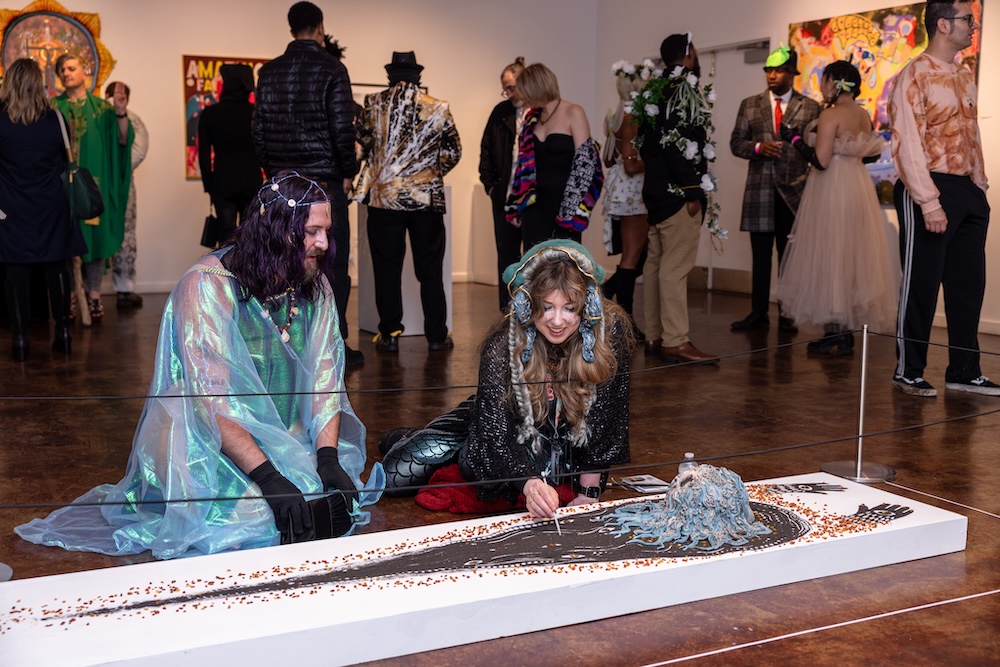
There was also an unexpected moment early in the night. Someone accidentally backed into the platform holding my installation, and when the platform shifted the sand vibrated and many of the detailed designs disappeared. Thankfully the person who tripped was completely fine, which was the most important thing. But in a strange way the moment also revealed something essential about the work. Some people had assumed the sand had been glued down or painted in place. When it shifted, it suddenly became clear that the entire surface was loose and hand-drawn. I sat beside the piece and carefully repaired it, re-drawing the patterns into the sand and amber while people watched.
For me that moment captured the spirit of the work. The installation only existed in that exact form on that particular night. It could be recreated, but it would never be exactly the same again. Everyone there was witnessing something temporary, something that belonged only to that moment in time. And in a way that felt very fitting for the Surreal Salon itself.
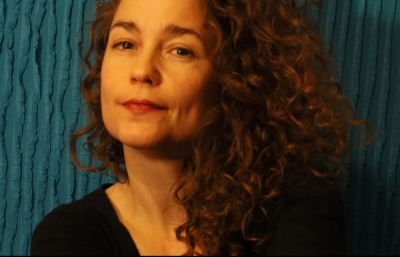
River Reishi is a multidisciplinary artist whose sculptures and ephemeral sand installations explore myth, grief, and the mysterious threshold between worlds. Drawing on feminine water deities and ancient storytelling traditions, she works with materials such as sand, amber, and light to create environments that exist only briefly in time.
See more at riverreishi.com and on Instagram @riverreishi.